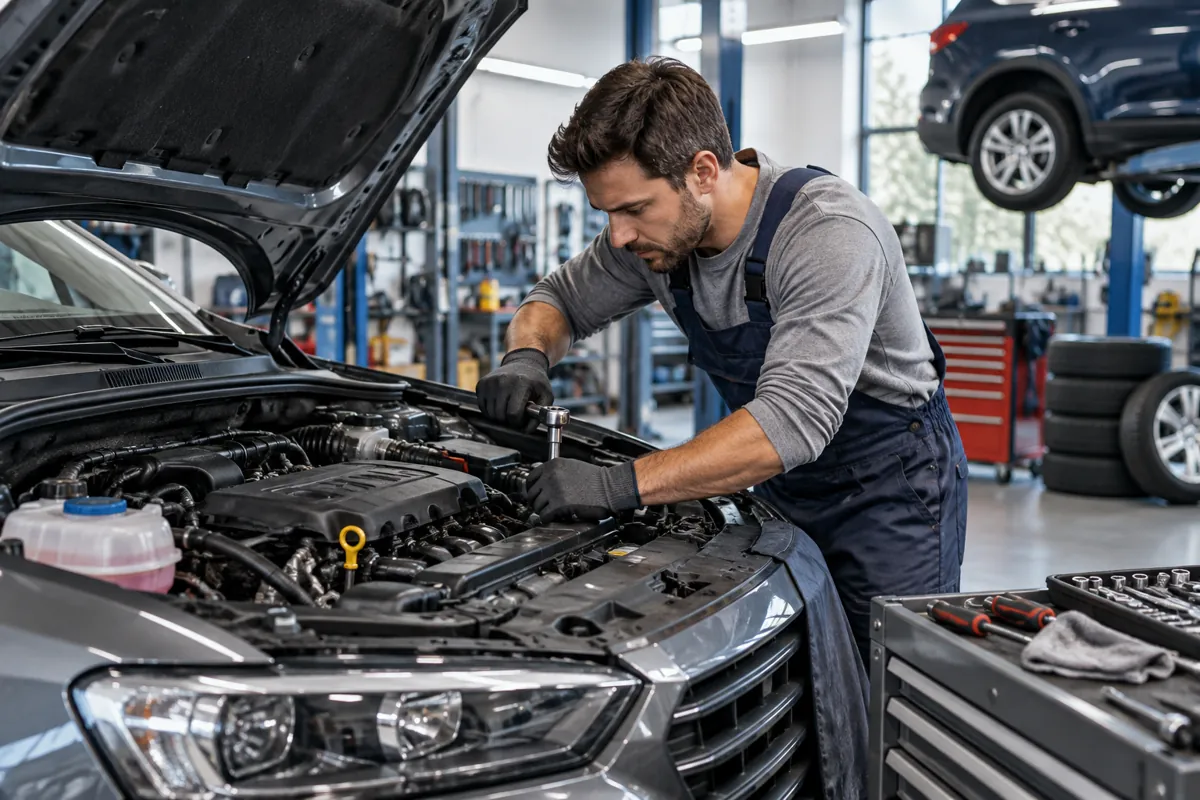
Car Maintenance & Repair
Oil changes, tires, brakes and common repairs
Introduction
Proper car maintenance and repair are essential aspects of owning a vehicle. Regular upkeep helps ensure the safety, reliability, and longevity of a car. Neglecting routine maintenance can lead to breakdowns, costly repairs, and even accidents. With the average passenger car traveling about 13,500 miles annually, staying on top of maintenance tasks can extend the vehicle’s lifespan and improve fuel efficiency, which for a typical sedan averages around 25 miles per gallon.
Understanding the fundamentals of car maintenance allows owners to identify issues early, prevent minor problems from escalating, and save money. According to the Automotive Maintenance and Repair Association, the average car owner spends approximately $500 per year on routine maintenance, but investing in proper upkeep can reduce overall repair costs by up to 30 percent over the vehicle's lifespan.
Definition and core concepts
Car maintenance encompasses all procedures aimed at keeping a vehicle in optimal condition. It involves inspecting, servicing, and replacing components based on manufacturer guidelines or mechanical signs. Regular tasks include oil changes, tire rotations, brake inspections, and fluid top-ups. Car repair, on the other hand, addresses fixing or replacing specific faulty parts when issues arise.
The core concepts of vehicle maintenance are preventive care and corrective repairs. Preventive maintenance involves scheduled actions such as replacing spark plugs every 30,000 miles or changing engine oil every 5,000 to 7,500 miles. Corrective repairs occur after identifying a problem like a failed alternator or a worn-out clutch, requiring targeted fixes. Both aspects are vital to ensure safety and efficiency.
Modern cars are equipped with diagnostic systems like On-Board Diagnostics II (OBD-II), which provide codes indicating specific faults. These codes streamline troubleshooting, giving mechanics and owners clearer insights into issues. For example, a code P0300 indicates a random misfire, signaling the need for inspection of spark plugs, fuel injectors, or ignition coils.
Understanding vehicle warranties further clarifies maintenance responsibilities. Many manufacturers specify that failing to adhere to maintenance schedules can void the warranty. For instance, a Toyota warranty might require oil changes every 10,000 miles if using synthetic oil, emphasizing the importance of following manufacturer's recommendations.
How it works
Car maintenance functions through a combination of scheduled inspections and real-time diagnostics. Manufacturers specify intervals based on mileage and time. For example, a Honda Civic owner should plan for a 30,000-mile service that includes replacing spark plugs, inspecting the timing belt, and checking the brake system. These procedures help detect wear and prevent unexpected failures.
Technicians utilize specialized tools such as pressure gauges, code readers, and lubrication equipment to perform repairs and adjustments. Modern cars often feature sensors that continuously monitor system health—parameters like tire pressure, oil pressure, and brake pad thickness are fed into vehicle control units. If any value falls outside safe limits, alerts appear on the dashboard, prompting owner attention.
Routine maintenance includes fluid exchanges—engine oil, transmission fluid, brake fluid, coolant. For example, replacing brake fluid every two years can prevent corrosion in brake lines, reducing the risk of brake failure. Tire pressure checks involve using a gauge to ensure levels stay within the range specified by the manufacturer, often around 32 to 35 pounds per square inch (psi) for passenger cars.
Alignment and balancing are additional processes that keep the vehicle handling smoothly. Misaligned wheels can cause uneven tire wear, which typically results in replacing tires costing around $100 to $200 per tire. Proper alignment ensures tires wear evenly, improving fuel efficiency and road safety.
Moreover, the process of diagnosing issues relies heavily on the vehicle’s electronic systems. For instance, if the engine control unit detects an imbalance in the air-fuel mixture, it adjusts accordingly, but repeated errors can trigger a check engine light, indicating the need for professional diagnosis and repair.
Practical application
Applying regular maintenance tasks can significantly reduce the likelihood of breakdowns. Changing engine oil every 5,000 to 7,500 miles, depending on driving conditions and oil type, maintains proper lubrication and prevents engine wear. For example, synthetic oils may extend intervals up to 10,000 miles but come with a higher initial cost—typically $40 to $70 per oil change.
Wheel and tire maintenance include rotations every 5,000 to 7,500 miles and checking tire pressure monthly. Properly inflated tires improve fuel economy; underinflated tires by 10 psi can decrease mileage by up to 3 miles per gallon, costing the average driver about $120 annually on fuel.
Brake system upkeep involves inspecting pads and rotors every 10,000 miles or annually. Replace brake pads before they wear beyond 3 millimeters thickness to prevent rotor damage, which can elevate repair costs from $150 to $300 per axle for pad replacement. Regular brake fluid replacement every two years ensures consistent braking performance.
Battery maintenance includes cleaning terminals and ensuring proper charge levels. A typical car battery lasts about 3 to 5 years; replacing a battery early (costing around $100-$200) can prevent roadside failures. Checking for corrosion or buildup can prolong battery life.
Cooling system care involves flushing the radiator and replacing coolant every 30,000 miles or every two years. Failing to maintain coolant levels risks overheating and engine damage. Coolant costs approximately $10 per gallon, with draining and refilling services priced around $100 in a typical repair shop.
In addition, regular inspections of suspension components, belts, and filters are vital. For example, replacing a timing belt every 60,000 to 100,000 miles averts engine damage, which can cost upwards of $1,000 if neglected.
Common mistakes
One frequent error involves neglecting scheduled maintenance. Skipping oil changes or delaying brake inspections can lead to severe damage. For instance, driving with old or dirty oil accelerates engine wear, resulting in engine rebuild costs exceeding $2,500. Many owners ignore warning lights, assuming they are minor issues, but dashboard alerts often point to critical problems.
Another mistake is using non-standard or low-quality parts during repairs. Opting for cheap brake pads or replacement filters may save money initially but can compromise safety and durability, leading to more frequent replacements or accidents. A study by the National Highway Traffic Safety Administration (NHTSA) shows that substandard parts contribute to approximately 20,000 accidents annually.
Overlooking tire maintenance also causes problems. Failing to check tire pressure regularly can bring about uneven tire wear, reduced handling, and increased fuel consumption. Additionally, improper wheel alignment after minor impacts can cause uneven tread wear, decreasing tire life by up to 50 percent.
Attempting complex repairs without proper knowledge or tools can be dangerous. Many car owners try to replace timing belts or transmission components themselves, risking improper installation that may lead to engine failure. In such cases, professional diagnostics are recommended to avoid costly damage.
Expert recommendations
Mechanics advise adhering strictly to the manufacturer's maintenance schedule. For example, Honda recommends a major service at 30,000 miles, including replacing spark plugs and inspecting belts. Following these guidelines preserves warranty coverage and ensures vehicle safety.
Utilizing quality parts and fluids is another area stressed by professionals. Genuine OEM (Original Equipment Manufacturer) components have been tested for compatibility, longevity, and safety. Using OEM engine oil, for example, guarantees the proper viscosity and additive package, maintaining engine health effectively over the recommended interval.
Regular inspections by certified technicians can identify issues early. Many service centers offer comprehensive multi-point checks, which can cost $100 to $150 but often uncover hidden problems. These checks include inspecting suspension, steering, brakes, and fluid levels, reducing the chance of unexpected breakdowns.
Maintaining detailed records of all service activities helps in tracking vehicle performance and resale value. Keeping receipts, service intervals, and component replacement dates allows for better planning and can prove helpful during warranty claims.
Conclusion
Car maintenance and repair require ongoing attention to detail and adherence to established schedules. Properly maintained vehicles tend to last longer, perform better, and incur fewer costly repairs. Grounded in a clear understanding of core concepts and routine applications, owners can make informed decisions to keep their cars on the road safely and efficiently.
Consistent care combined with professional expertise and quality parts creates a reliable foundation for vehicle longevity and safety. Neglecting these responsibilities not only risks breakdowns but can also compromise the safety of all road users.